
Most homes do not fall apart because people do not care. They fall behind because the cleaning routine depends on the perfect day: enough energy, enough time, enough focus, and no interruptions. Busy homes rarely get that kind of day. A flexible daily cleaning routine works better because it protects the most visible friction points, adjusts to low-energy days, and keeps mess from building into full recovery mode.
The goal is not to clean every room every day. The goal is to keep the house easy to live in even when life is uneven. That means using small reset tasks, room priorities, and a weekly support structure that can bend without breaking.
Why rigid cleaning schedules often fail
A rigid schedule usually assumes that every Tuesday will feel like every other Tuesday. Real homes do not work that way. Work runs late. Kids get sick. Motivation disappears. Laundry multiplies. The kitchen takes more punishment one day and the bathroom becomes the problem the next. When a routine is too strict, one missed day feels like failure, and many people stop trying to follow it at all.
Flexible routines work because they focus on protection, not perfection. They define the smallest useful version of the task so that the house still moves in the right direction on hard days.
What a flexible routine should do
Protect the rooms with the biggest emotional impact
Kitchens, bathrooms, entryways, and the main living space shape how the whole home feels. When these areas look under control, the home still feels manageable even if a bedroom or storage zone is less polished.
Make this easier to follow
Download the free BetterHomeHabits checklists and turn these steps into a simple routine you can repeat.
Get the free checklistsReduce visual mess quickly
Visible clutter raises stress faster than people expect. A good daily routine clears obvious surfaces, handles dishes before they harden into backlog, and resets the items that migrate from room to room.
Be small enough to repeat
If the routine takes too long to start, it will not survive busy seasons. The best daily routines have a full version and a reduced version. Both count.
Key takeaway
Your routine should answer this question: “What are the few things that keep the house from feeling out of control?” Start there and protect those tasks first.
Simple room-by-room daily cleaning plan
1. Kitchen close-out
Clear the sink, wipe counters, and put away the most visible leftovers from the day. If you only do one task, do this one. The kitchen creates a lot of emotional noise when it is open and messy.
2. Bathroom quick check
Wipe the sink, straighten the towel situation, and make sure the floor and toilet zone feel acceptable. This keeps a small mess from turning into a room people avoid.
3. Surface scan in the main living area
Clear the coffee table, dining table, or the one surface that is becoming the catch-all. A single reset here can change how the entire home feels.
4. Laundry containment
You do not need to finish all laundry every day, but you do need to contain it. Move the load, fold one basket, or return clean items to one room. Containment matters more than completion.
5. Entryway reset
Shoes, bags, packages, and random drop items make a house feel chaotic fast. A quick entryway reset prevents mess from spreading deeper into the home.
The 10-minute version for low-energy days
Some days you need the minimum effective routine. Use a timer and only do these:
- Clear the sink or run the dishwasher.
- Return visible clutter from one main surface.
- Reset the bathroom sink and towels.
- Do a 60-second entryway sweep.
This version is not “less valid.” It is what keeps the house from sliding into catch-up territory.
The weekly support routine behind the daily routine
Daily resets protect order. Weekly tasks remove buildup. Without weekly support, daily resets start to feel pointless because dust, floors, bathroom grime, and hidden clutter keep growing in the background.
What to handle weekly
- Floors in active rooms
- Bathroom deeper clean
- Fresh bedding or at least a bedroom reset
- Dust-prone surfaces
- Trash and fridge scan
Think of the daily routine as maintenance and the weekly routine as support. Both matter, but they do different jobs.
Printable support tool
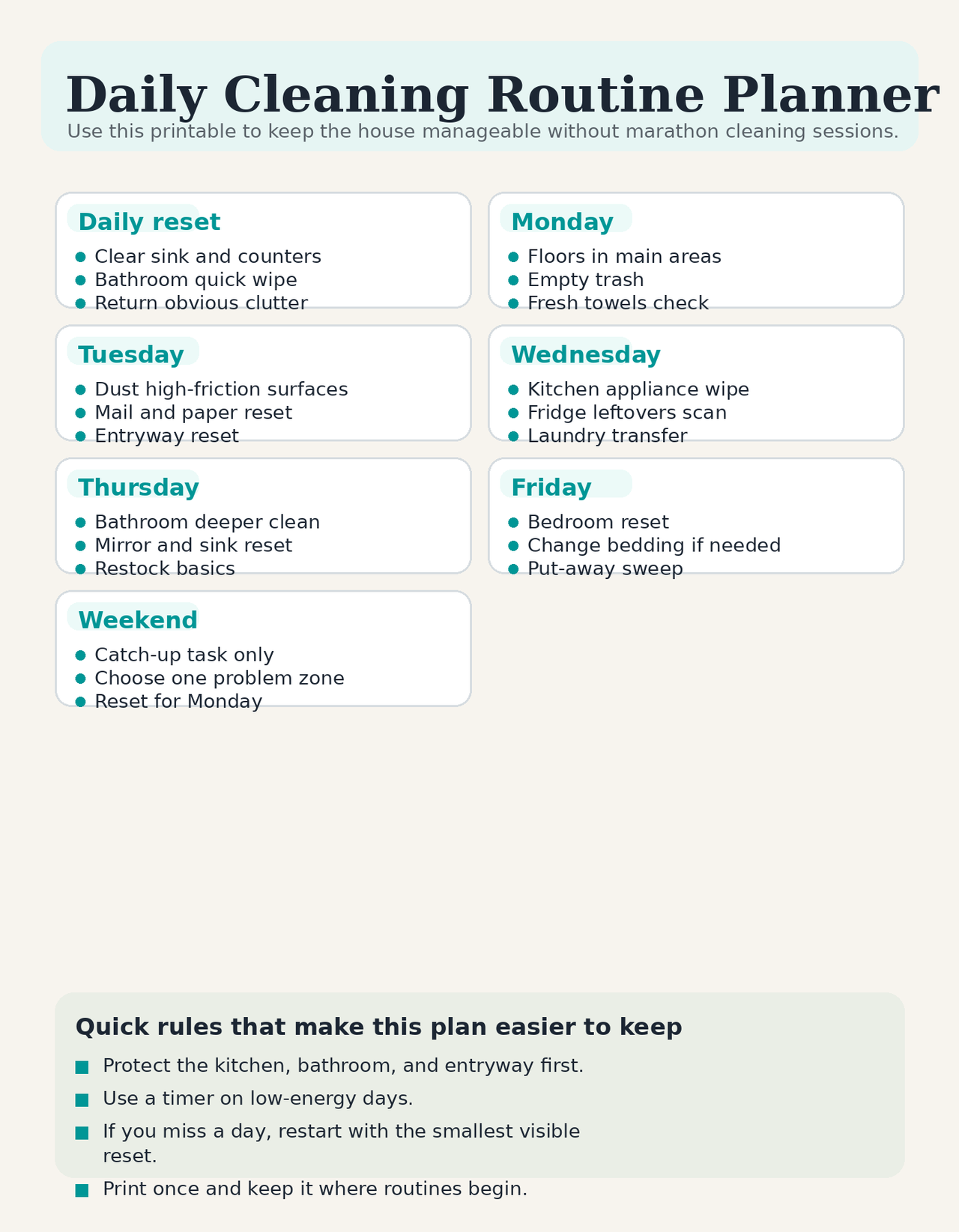
Use the Daily Cleaning Routine Planner if you want one page you can print, follow, and repeat without rethinking the system every day.

How to make the routine stick
Anchor tasks to moments you already have
Attach the kitchen reset to dinner cleanup. Attach the bathroom check to getting ready for bed. Attach the entryway reset to locking the door or charging your phone.
Make supplies easy to grab
A cloth in the bathroom, a fast spray in the kitchen, and a small basket for clutter returns can dramatically shorten the setup cost of cleaning.
Use one visible checklist
When the routine lives only in your head, it feels heavier. A printed one-page routine lowers decision fatigue and makes restarting easier after a missed day.
Mistakes that make daily cleaning harder than it needs to be
- Trying to deep clean during the daily reset window.
- Giving every room the same priority.
- Keeping too many items on active surfaces.
- Starting laundry without any plan to contain the result.
- Expecting the full routine to happen every single day.
A simple version to remember
- Close the kitchen.
- Check the bathroom.
- Clear one visible surface.
- Contain laundry.
- Reset the entryway.
Frequently asked questions
What if I miss a day?
Do not try to “make up” everything at once. Restart with the smallest visible reset: kitchen, bathroom, or one surface. Momentum returns faster that way.
Should I clean every room every day?
No. Protect the rooms that create the biggest friction first. A manageable home does not require equal attention everywhere every day.
How long should the routine take?
The full version can be 15 to 25 minutes. The reduced version can be 10 minutes or less. What matters most is that it happens often enough to stop catch-up mess.
Build the full cleaning routine
Use these related guides to move from a quick reset to a weekly or monthly cleaning system.
- try the 5-minute pickup routine — The 5-Minute Pickup Routine That Keeps Clutter From Spreading
- use the 15-minute home reset checklist — 15-Minute Home Reset Checklist for Busy Homes
- follow the Sunday reset checklist — Sunday Reset Checklist for a Cleaner Week
- complete the 7-day home reset challenge — 7-Day Home Reset Challenge: A Simple Room-by-Room Plan
- use the bathroom cleaning checklist — Daily, Weekly, and Monthly Bathroom Cleaning Checklist
Want the routine in one printable page?
Use the printable planner, then pair it with the weekly cleaning schedule so your home stays manageable even during busy weeks.
How this guide was prepared
This guide was written for real-life home routines: clear first steps, common mistakes, practical examples, and habits that are easy to repeat. It was reviewed for clarity, internal linking, and safety notes before publication or update.
We update guides when better examples, official safety references, stronger checklists, or clearer warnings are available.